Hard-rock gold plant built around wet pan mills
A sample mercury-free gravity plant for quartz vein ore. The ore is crushed to under 20 mm, ground in a bank of wet pan mills and passed over carpet sluices and centrifuges. Press Show ore flow to follow the ore through the plant, one step at a time.
10 t/h milled through eight wet pan mills, built in one go.
- Capacity
- 10 t/h
- Processed per month
- 5,200 t
- Prime power
- 400 kVA
- First gold
- about 4 months
Follow the ore from the crusher to the gold room, one step at a time.
The process, step by step
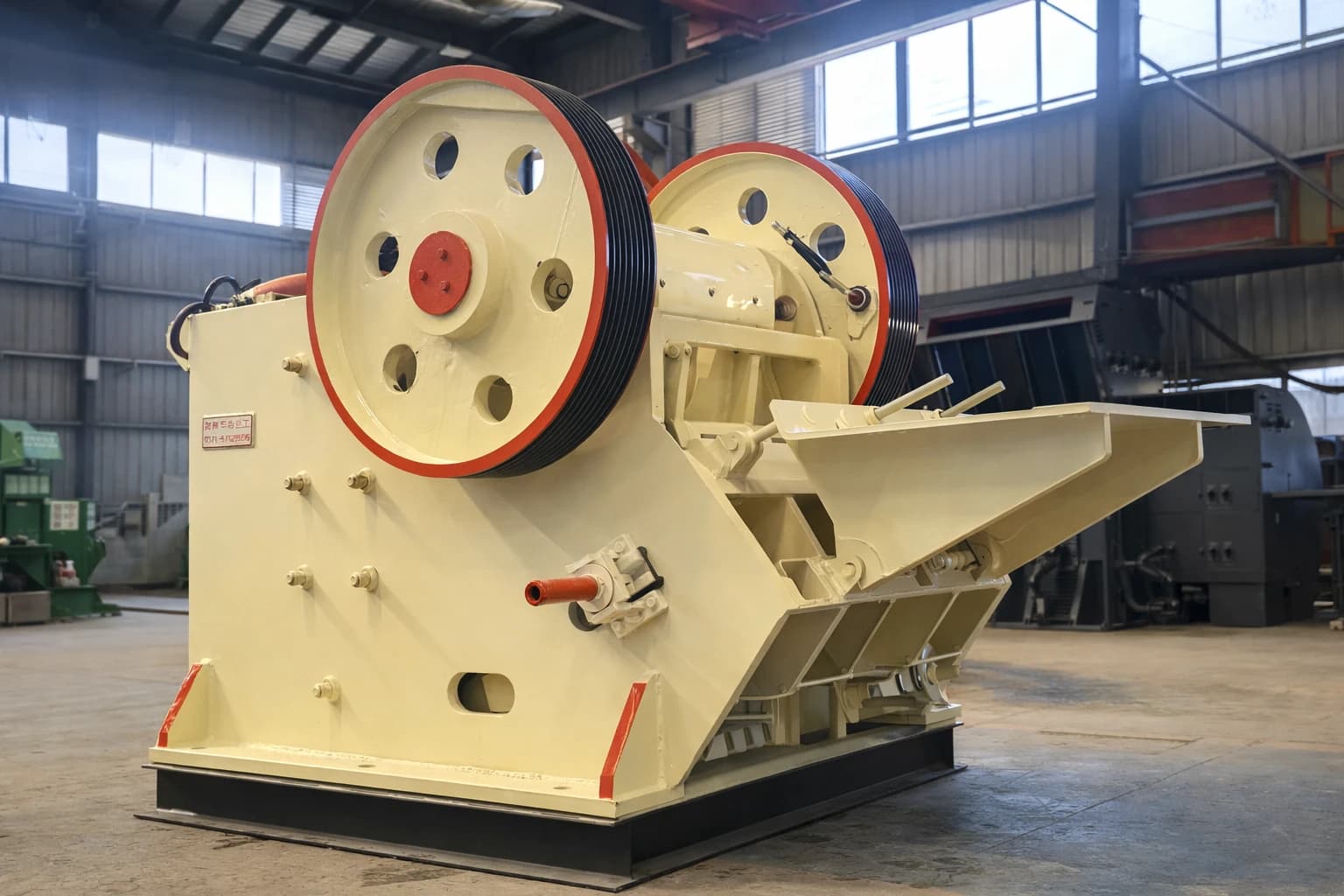
A loader or tipper feeds run-of-mine quartz ore into the primary jaw crusher, which breaks it down to about 60 mm.
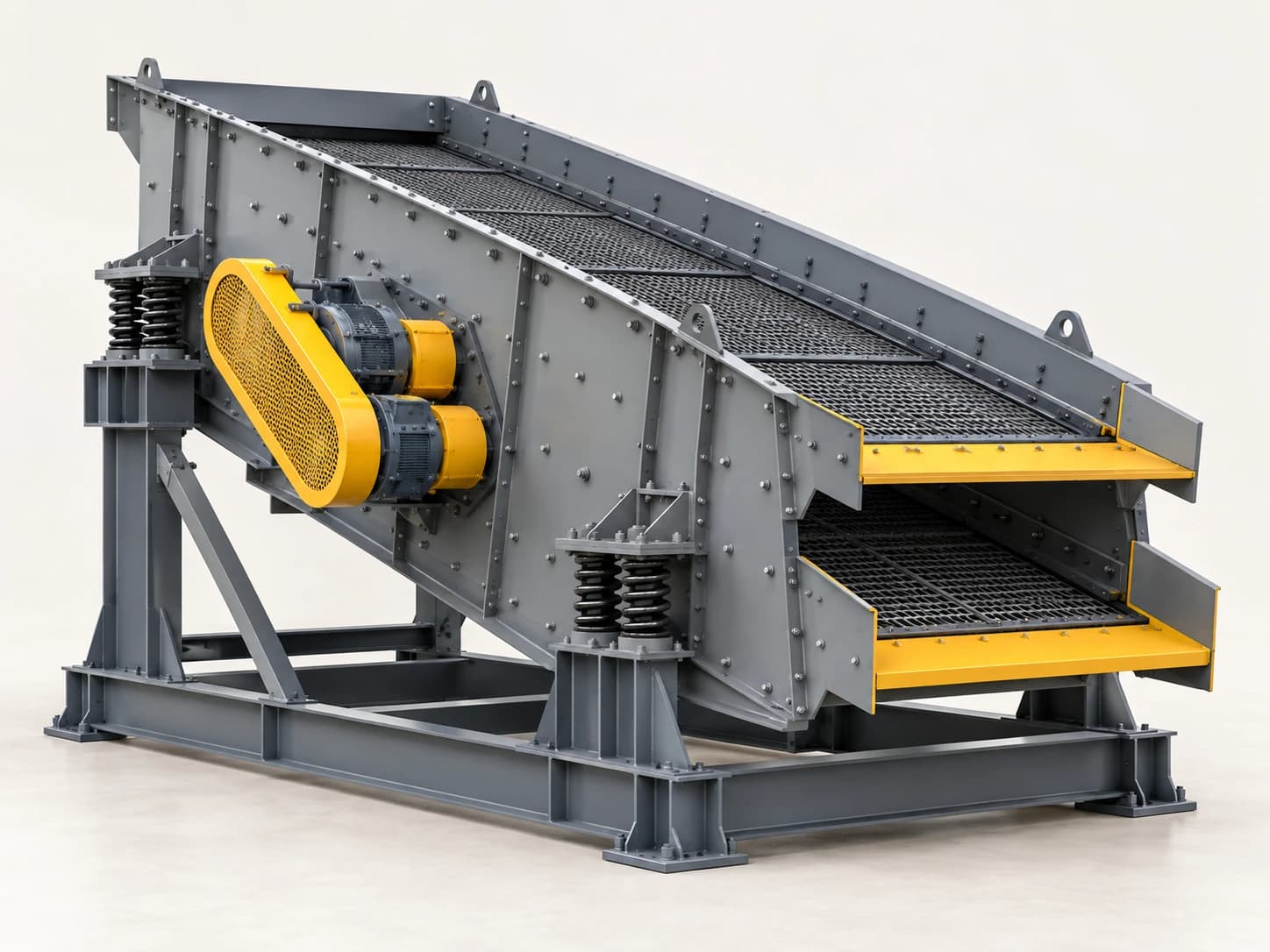
The vibrating screen passes everything under 20 mm. Oversize goes to the secondary crusher and back to the screen, so nothing coarser than 20 mm reaches the mills.
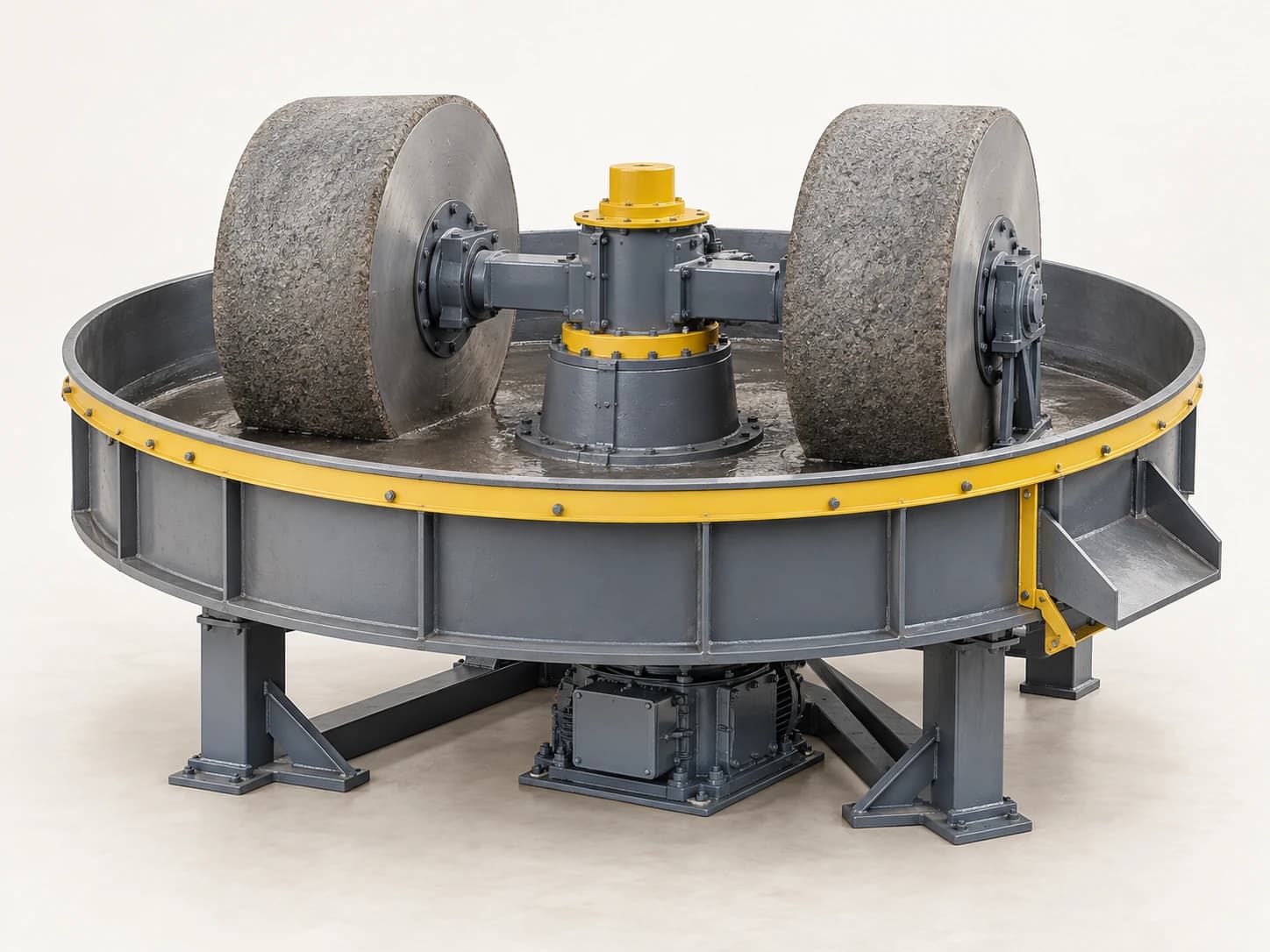
A fine ore bin and belt feeder share the crushed ore across the wet pan mills. Heavy rollers grind it with water into a slurry that leaves through 0.6 mm screens. No mercury is added.
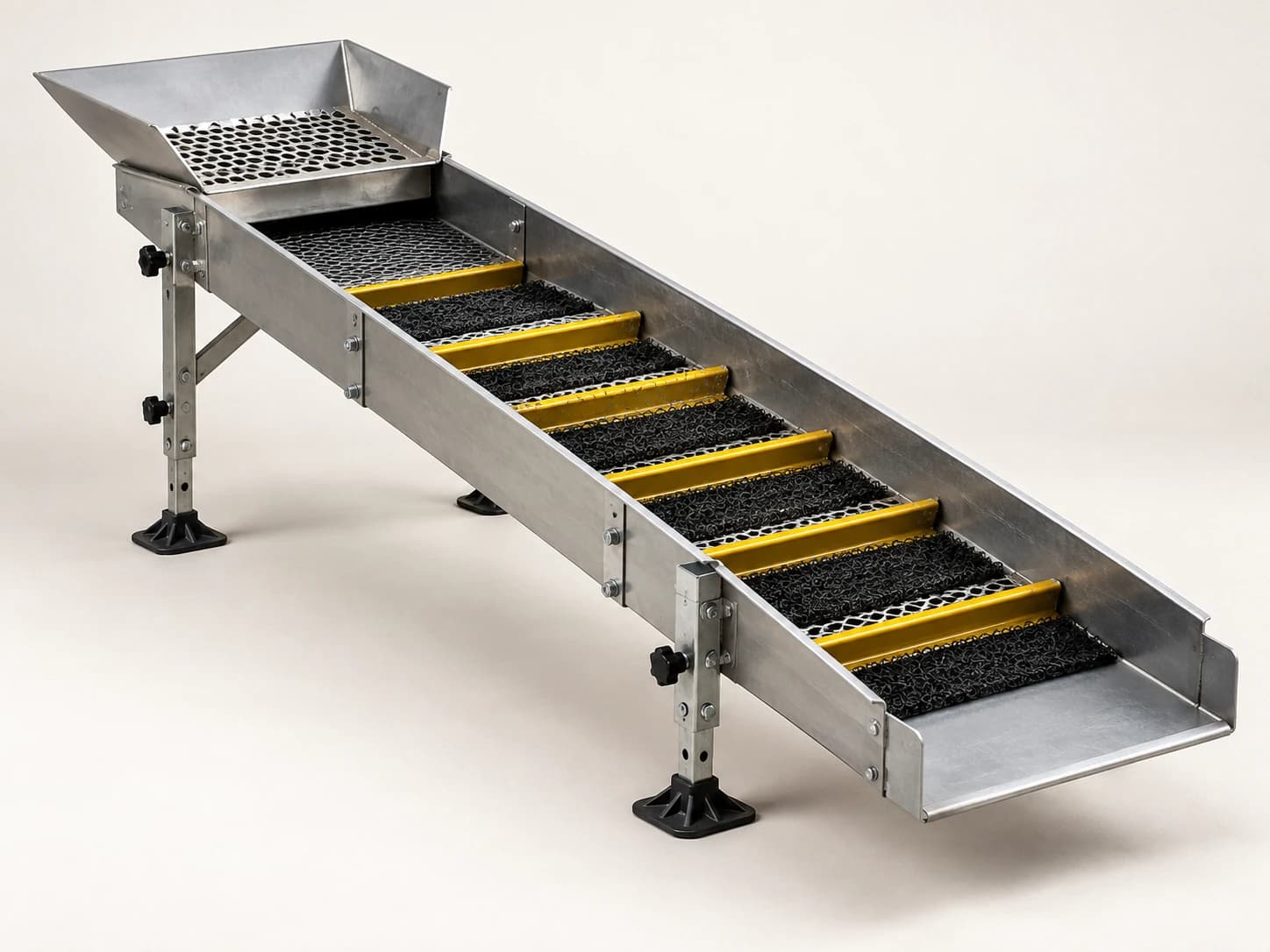
Each mill discharges over a carpet-lined sluice that catches the coarser freed gold. The carpets are lifted and rinsed in a locked wash tank at the end of every shift.
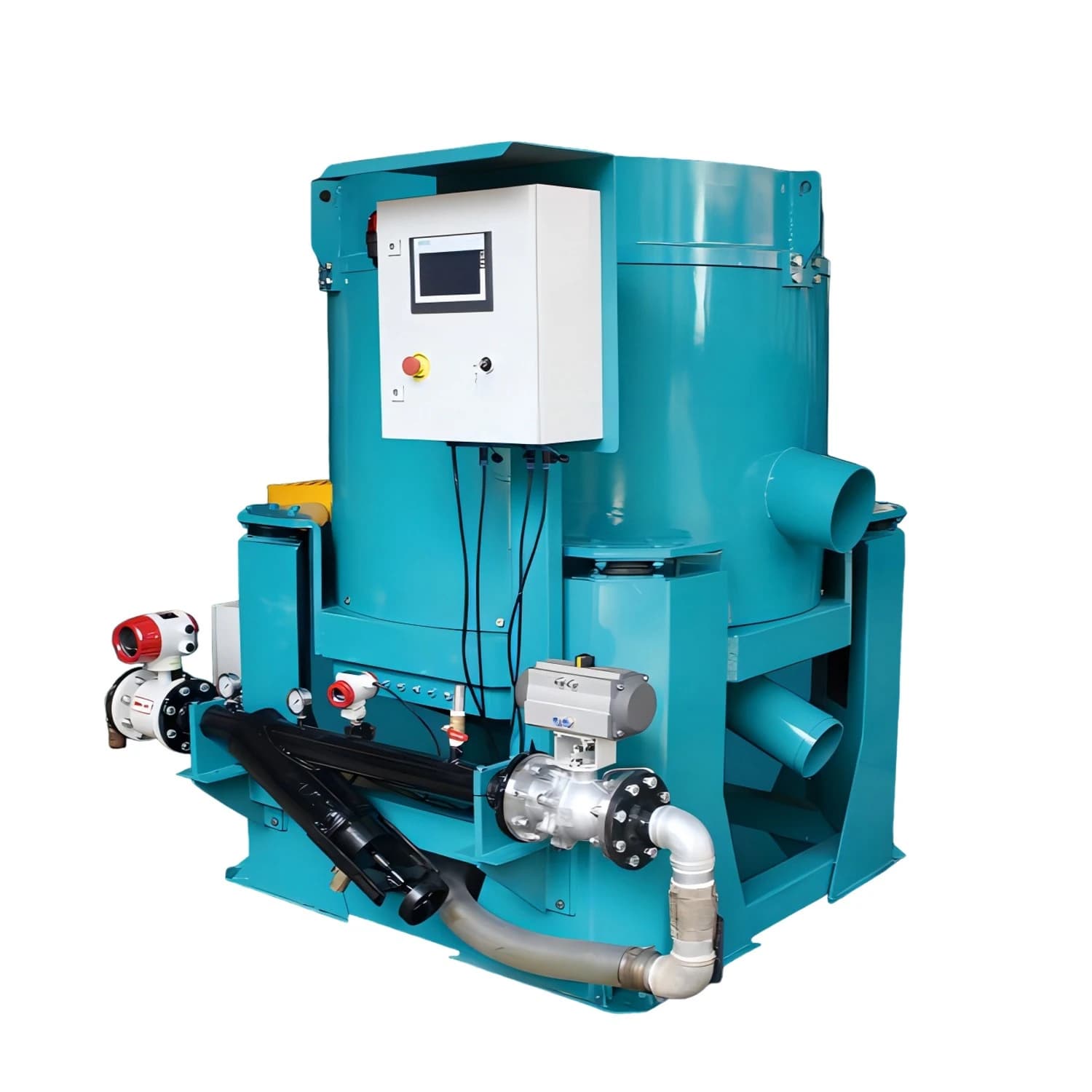
Slurry leaving the carpets is pumped to centrifugal concentrators, which hold the fine gold that the carpets let through.
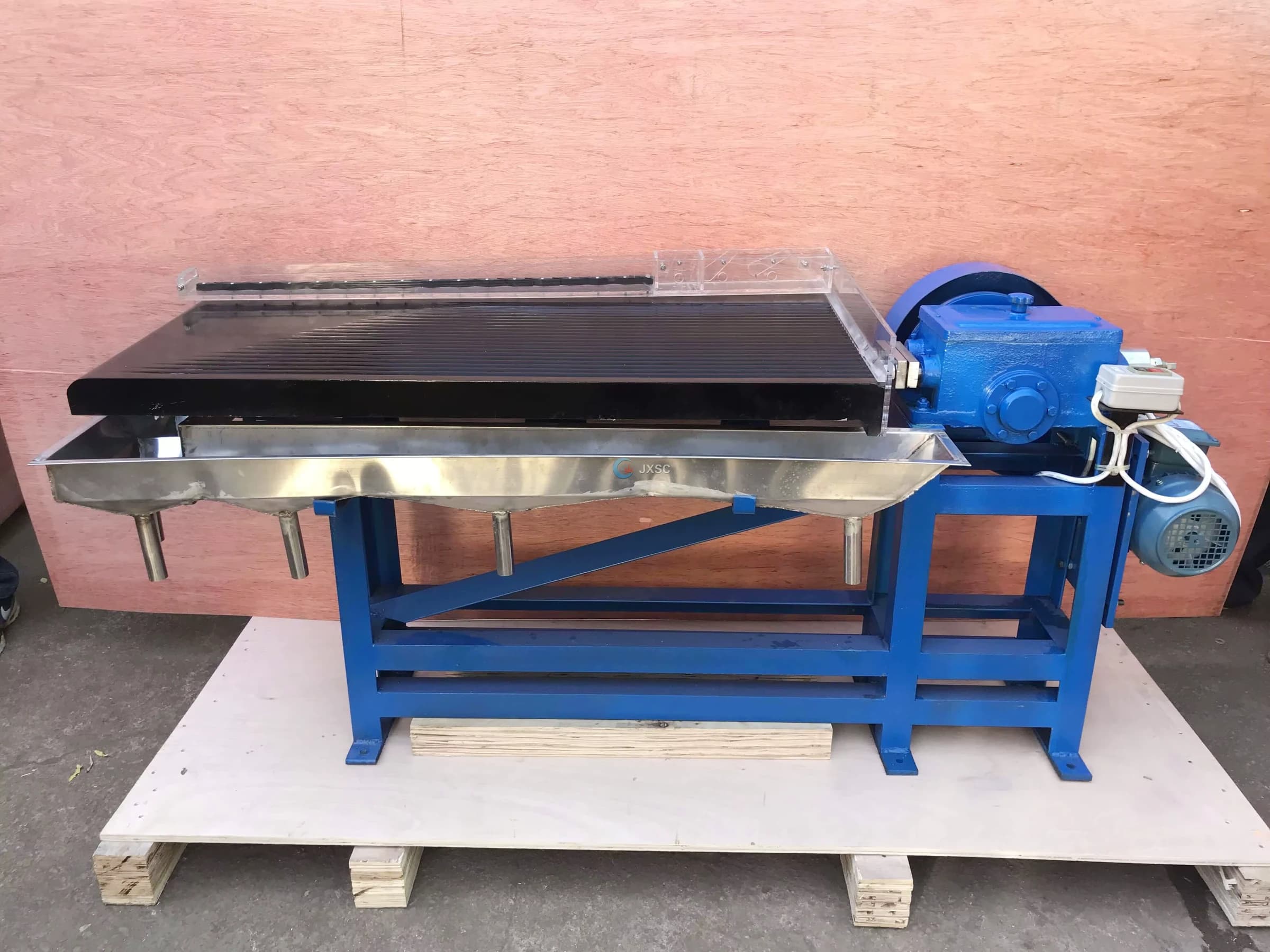
Carpet and centrifuge concentrates are upgraded on the shaking table. The gold then goes to the locked gold room for drying and smelting.
Tailings settle in a lined dam, where they are kept for later leaching. Clear water is decanted, held in the clean water tank and pumped back to the mills.
Full Scale Plant
| Nameplate / turndown | 10 / 7 t/h |
|---|---|
| Ore milled per day (20 h) | about 200 t |
| Crushing | PE-400×600 jaw + PEX-250×1000, closed circuit at 20 mm |
| Crushing / milling hours | 10 / 20 h per day |
| Wet pan mills | 8 × 1500, 22 kW each, 0.6 mm discharge |
| Gold recovery | 8 carpet sluices, 2 × STLB-60 centrifuges, 2 tables |
| Installed / running load | 300-340 / 200-250 kW |
| Power supply | 400 kVA prime |
| Circulating water / makeup | 40 / 6-10 m³/h |
| Crew per shift | 8 + shared mechanic |
| Gravity recovery envelope | 60-80% on free-milling ore |
What each stage looks like
The six main machines, in the order the ore passes through them.
Reaching 10 t/h
Full Scale Plant, built at once
Install all eight mills, both centrifuges and both shaking tables in one go. It gives the lower cost per tonne and the simpler schedule, and it suits a reef whose grade and free-gold behaviour have already been confirmed by a bulk sample or test milling.
Starter Modular Plant, then a second bank
Start with four mills at 5 t/h and prove the grade on real production. Once the reef is confirmed, add a second bank of four mills beside the first. The crushing circuit, tailings dam and gold room are built at full size from day one, so the second bank connects without stopping the first. Because each mill runs on its own, mills can also be serviced one at a time while the rest keep grinding.
Test the ore first
Wet pan mills suit free-milling quartz ore, where most of the gold is released by grinding to about 0.6 mm. Gravity alone usually recovers 60-80% of the gold in that kind of ore. If the gold is very fine or locked in sulphides, a larger share stays in the tailings. That is why the tailings dam is lined and kept, so the material can be leached later. A gravity recoverable gold test on a bulk sample shows which case applies before the mill count is fixed.
Next step
Talk through the plant with our team
We can walk you through the flowsheet, the equipment list and the delivery schedule, and size the mill bank to your ore.