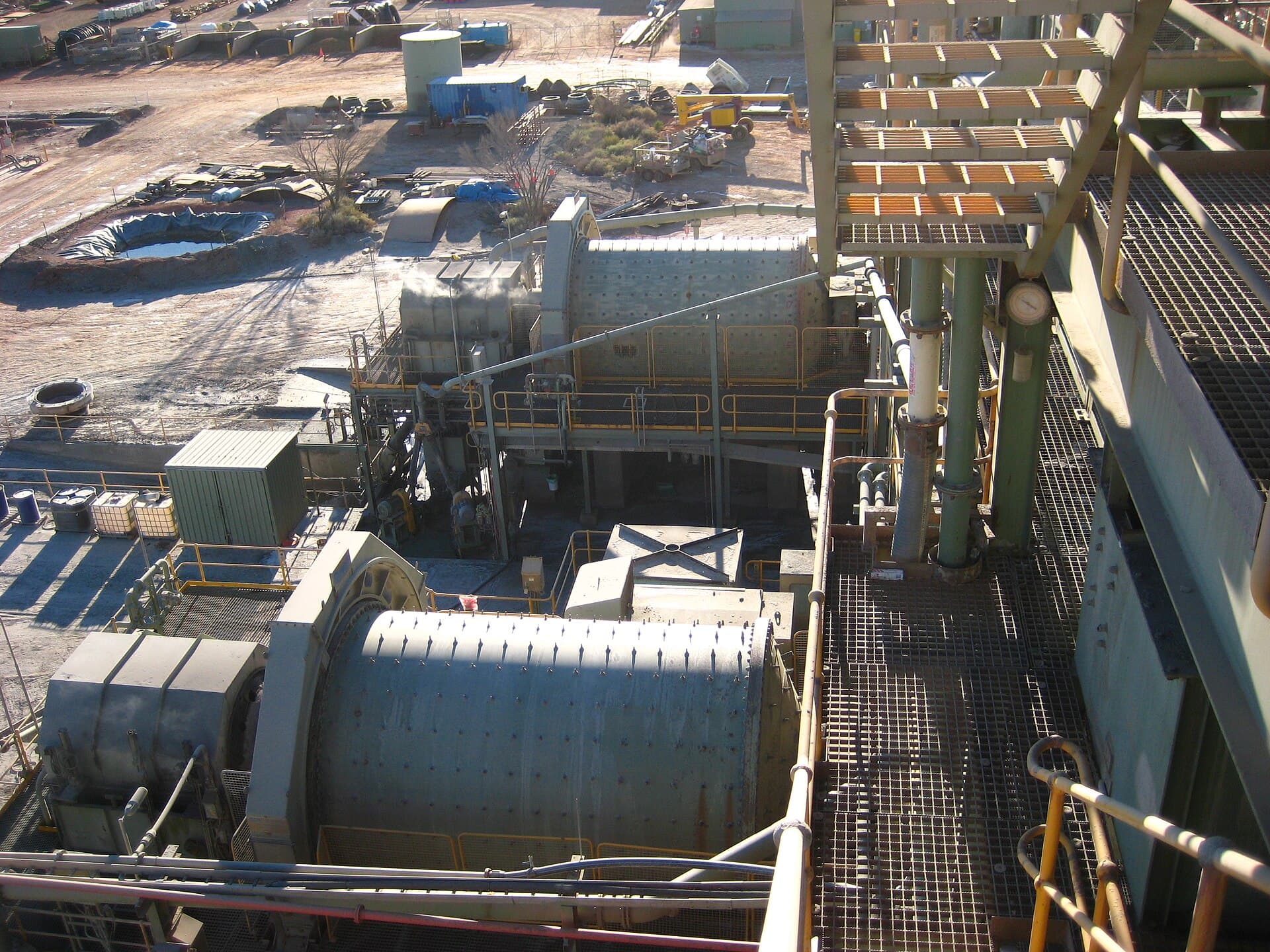
Wet Pan Mill Specifications
The figures below describe typical industry specifications for this class of equipment rather than a single fixed model. Use them to scope a requirement, then confirm exact figures against the supplied unit before purchase.
| Specification | Typical value |
|---|---|
| Common pan diameters | 1100, 1200, 1400, 1600 mm |
| Rollers | Two (most common) or three |
| Feed size | ≤20–30 mm |
| Product size | 0.074–0.6 mm (about 100–150 mesh typical) |
| Throughput | 0.5–3 t/h; 3–15 t/day on small machines |
| Motor power | 5.5–30 kW by size |
| Power supply | 400 V 3-phase 50 Hz, or diesel engine |
| Water | Added in the pan to make a pumpable slurry |
| Machine mass | 4–15 t |
| Wear parts | Roller tyres and pan lining, high-manganese |
What a Wet Pan Mill Is Used For
- Primary grinding on Tanzanian small-scale gold mines
- Feed to shaking tables and sluices
- Replacement for mercury amalgamation when paired with gravity recovery
- Regrind of gravity tailings
Maintenance Schedule
Most premature failures in this equipment class trace back to a missed routine check rather than a design fault. The intervals below are a practical starting schedule; adjust them to your duty cycle and the manufacturer manual.
| Interval | Task |
|---|---|
| Every shift | Check roller-to-pan clearance; confirm water addition and that the discharge is not packing. |
| Daily | Grease the main bearing and roller shafts; inspect liner bolts. |
| Weekly | Measure roller tyre and pan-liner wear; inspect gearbox oil. |
| Monthly | Check drive-belt or gear mesh; inspect pan for cracks at the discharge. |
| On wear | Replace roller tyres and pan lining together so the grinding geometry stays even. |
Frequently Asked Questions
Why is the wet pan mill so common in Tanzania?
Because it is cheap, simple, repairable in Mwanza or Geita workshops, and it grinds and slurries in one machine. A 1200 mm mill with a shaking table is the standard mercury-free small-plant pairing. Ball mills recover more on hard ore at higher throughput, but they cost more and need better power and cyclones. For many licensed small mines the pan mill is the rational first mill.
Can I put mercury in a wet pan mill?
You can, and many still do. You should not. The mill will amalgamate free gold, but it will also flour mercury and lose both mercury and gold to tailings, and it will poison the operators. A centrifugal concentrator or a shaking table after the pan mill recovers the gold without mercury. That upgrade is the single highest-value change most Tanzanian small plants can make.
1100 mm or 1200 mm?
1200 mm is the most common production size. 1100 mm suits very small throughput or a second mill on a cleaning duty. Above about 10–15 t/day, look at a small ball mill rather than adding more pan mills — power and labour start to favour one closed grinding circuit.
Supply and Delivery Across Tanzania
Bart Mining supplies wet pan mill and related equipment to mining operations throughout Tanzania, with primary coverage of the Lake Victoria Goldfields (Mwanza, Kahama, Geita, Shinyanga and Bukombe), alongside the Lupa Goldfields around Chunya and Mbeya, and delivery nationwide from Dar es Salaam.
Commonly supplied to: Mwanza.
Request a quotation
Need a wet pan mill specified for your site?
Tell us your duty, depth or throughput and available power supply. We will come back with a specification and price, and flag anything on site that needs to change to make it work.