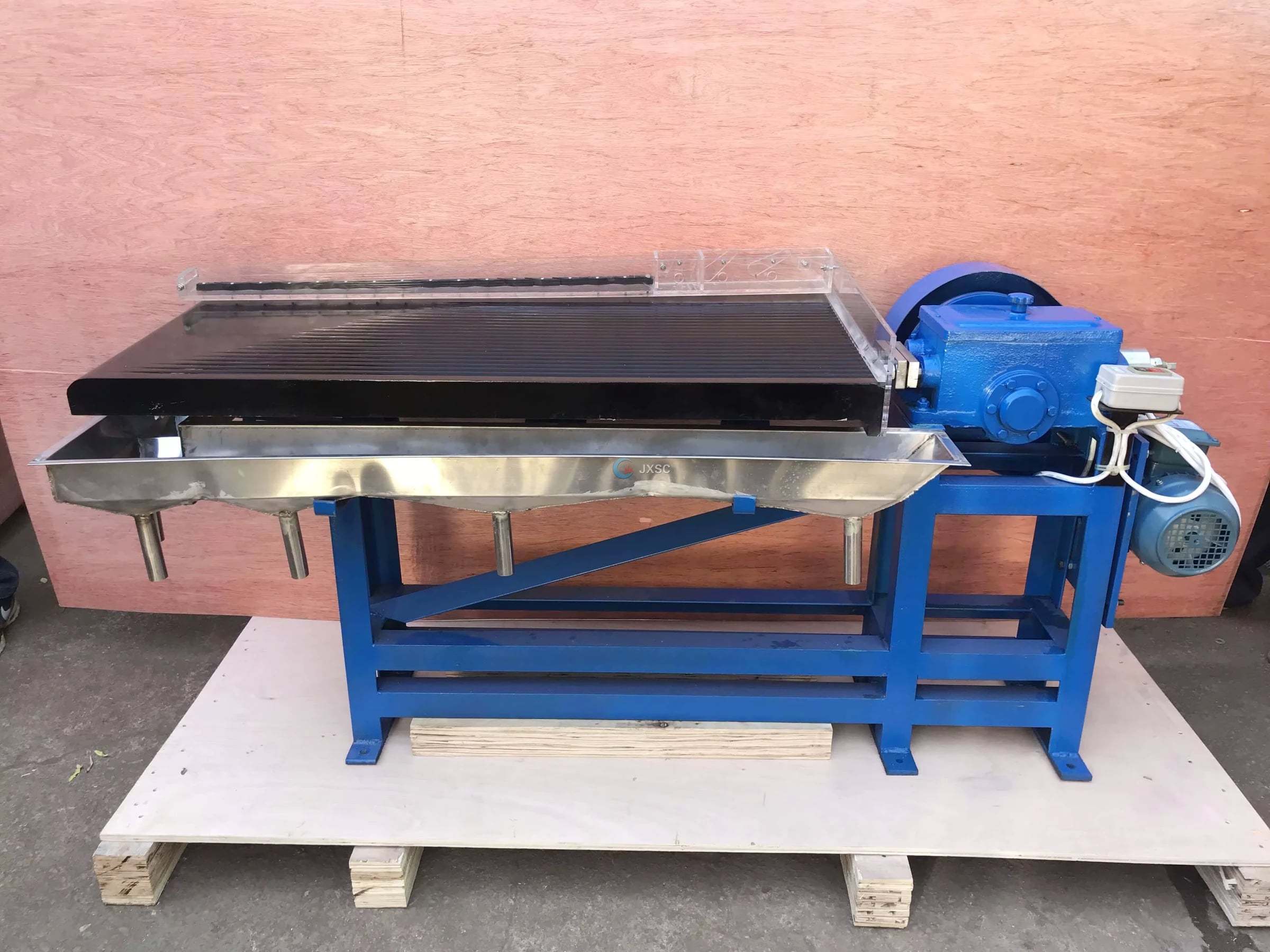
Gold Shaking Table Specifications
The figures below describe typical industry specifications for this class of equipment rather than a single fixed model. Use them to scope a requirement, then confirm exact figures against the supplied unit before purchase.
| Specification | Typical value |
|---|---|
| Deck size | 1,100×500 mm up to 4,500×1,850 mm |
| Capacity | 0.3–1.5 t/h on a full-size deck |
| Feed size | −2 mm, ideally deslimed below 45 µm |
| Feed density | 20–30% solids |
| Wash water | 0.5–1.5 m³/h |
| Stroke length | 8–30 mm, adjustable |
| Stroke frequency | 240–320 strokes per minute |
| Deck slope | 0–10°, adjustable in two axes |
| Motor power | 0.75–1.5 kW |
| Deck surface | Fibreglass or rubber-covered timber with riffles |
| Concentrate grade | High, often directly smeltable after cleaning |
| Recovery range | 60–90% depending on liberation and desliming |
Gold Shaking Table: Uses and Applications
- Final cleaning of gravity concentrate
- Alluvial gold recovery in small plants
- Upgrading centrifugal concentrator product
- Tin, tantalum and other heavy mineral recovery
- Metallurgical laboratory test work
Maintenance Schedule
Most premature failures in this equipment class trace back to a missed routine check rather than a design fault. The intervals below are a practical starting schedule; adjust them to your duty cycle and the manufacturer manual.
| Interval | Task |
|---|---|
| Every shift | Check deck slope and water distribution are even along the full feed edge; clear riffle blockages. |
| Weekly | Inspect deck surface for wear and riffle damage; grease head motion bearings. |
| Monthly | Check stroke length against setting; inspect drive belt and eccentric for wear. |
| Quarterly | Level the frame and re-verify deck geometry; inspect support rockers or slides. |
| Annually | Resurface or replace the deck covering; overhaul the head motion. |
Frequently Asked Questions
How much gold can a shaking table recover?
60–90% on liberated gold, and the figure depends heavily on desliming. Fines below about 45 µm behave hydraulically rather than by density and are lost across the deck, which is why a table nearly always follows a centrifugal concentrator rather than replacing one.
Why must feed be deslimed before a shaking table?
Slimes increase pulp viscosity and disrupt the density stratification the table depends on. Without desliming, the separation blurs and both grade and recovery drop. A hydrocyclone or settling cone ahead of the table is standard practice.
How do I adjust a shaking table?
Three controls interact: deck slope, stroke length and wash water. Increase slope or water to push more material to tailings and raise concentrate grade; reduce them to raise recovery at lower grade. Change one variable at a time and let the deck stabilise for several minutes before judging.
Can a shaking table replace mercury?
Yes, for the final concentration step. Combined with a centrifugal concentrator upstream, a table produces a concentrate clean enough to smelt directly, removing any need for amalgamation. This pairing is the standard mercury-free route for small-scale operations.
Supply and Delivery Across Tanzania
Bart Mining supplies gold shaking table and related equipment to mining operations throughout Tanzania, with primary coverage of the Lake Victoria Goldfields (Mwanza, Kahama, Geita, Shinyanga and Bukombe), alongside the Lupa Goldfields around Chunya and Mbeya, and delivery nationwide from Dar es Salaam.
Commonly supplied to: Mwanza, Tarime, Shinyanga, Singida, Nzega and Igunga, Mpanda, Handeni.
Manufacturer or supplier of this equipment? Bart Mining sells machinery like the gold shaking table to buyers across Tanzania through its local market partnership.