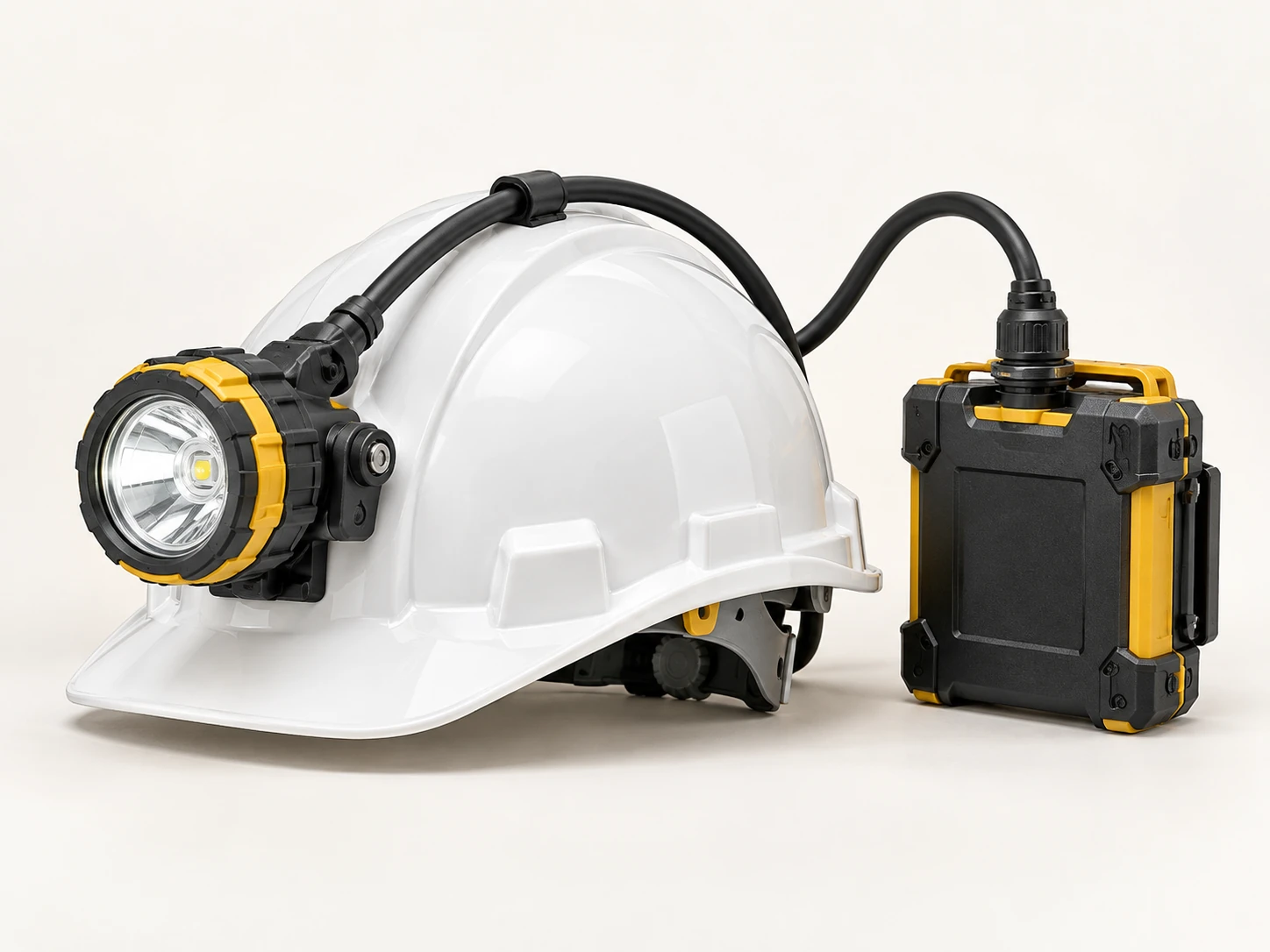
Mining Safety Helmet & Cap Lamp Specifications
The figures below describe typical industry specifications for this class of equipment rather than a single fixed model. Use them to scope a requirement, then confirm exact figures against the supplied unit before purchase.
| Specification | Typical value |
|---|---|
| Helmet standards | EN 397 or ANSI/ISEA Z89.1 Type I Class E |
| Shell material | HDPE or ABS; ABS retains impact strength better in heat |
| Electrical rating | Class E, tested to 20 kV where specified |
| Harness | 4 or 6 point with ratchet adjustment |
| Chinstrap | Mandatory for underground and work at height |
| Cap lamp output | 8,000–20,000 lux at 1 m |
| Lamp runtime | 12–16 h per charge |
| Battery | Li-ion, 2.6–6.6 Ah, 500+ charge cycles |
| Lamp ingress protection | IP65–IP67 |
| Hazardous area rating | Ex ia I Ma required for gassy mines |
| Charging | Rack systems for 10–100 lamps with fault indication |
| Helmet service life | Replace 3–5 years from date of manufacture, or after any impact |
Mining Safety Helmet & Cap Lamp: Uses and Applications
- Underground shaft and decline work
- Surface plant and construction areas
- Night-shift operations
- Emergency response and rescue teams
- Visitor and contractor issue
Maintenance Schedule
Most premature failures in this equipment class trace back to a missed routine check rather than a design fault. The intervals below are a practical starting schedule; adjust them to your duty cycle and the manufacturer manual.
| Interval | Task |
|---|---|
| Every shift | Check helmet shell for cracks, dents or crazing; confirm lamp is fully charged before descent. |
| Daily | Return lamps to the charging rack; log any lamp failing to charge and withdraw it from issue. |
| Weekly | Clean lamp lens and contacts; inspect cable and strain relief where a corded lamp is used. |
| Monthly | Inspect helmet harness webbing and ratchet; replace any harness showing wear. |
| 3–5 years | Replace helmets by manufacture date regardless of appearance. UV and heat degrade the shell invisibly. |
Frequently Asked Questions
How often must mining helmets be replaced?
Every three to five years from the date of manufacture moulded inside the shell, and immediately after any significant impact even if no damage is visible. Ultraviolet exposure and heat embrittle the polymer progressively, so a helmet that looks fine can have lost much of its impact performance.
What cap lamp runtime do I need?
At least the full shift plus a substantial reserve for emergency egress. A 12 to 16 hour lamp covers a typical shift with real margin. A lamp that dies underground is not an inconvenience, it is the start of an incident.
Does a cap lamp need intrinsic safety certification?
In any working where flammable gas may accumulate, yes. Look for Ex ia I Ma marking. Even in workings believed to be non-gassy, certified lamps are cheap insurance, since gas ingress is not always predictable and the consequence of ignition is catastrophic.
Are chinstraps really necessary?
Yes. A helmet that leaves the head during a fall or is knocked off by a low back provides no protection at all. Chinstraps are mandatory underground and for work at height in most safety regimes, and their absence is among the most commonly cited findings in mine inspections.
Supply and Delivery Across Tanzania
Bart Mining supplies mining safety helmet & cap lamp and related equipment to mining operations throughout Tanzania, with primary coverage of the Lake Victoria Goldfields (Mwanza, Kahama, Geita, Shinyanga and Bukombe), alongside the Lupa Goldfields around Chunya and Mbeya, and delivery nationwide from Dar es Salaam.
Commonly supplied to: Tarime, Musoma and Butiama.
Manufacturer or supplier of this equipment? Bart Mining sells machinery like the mining safety helmet & cap lamp to buyers across Tanzania through its local market partnership.