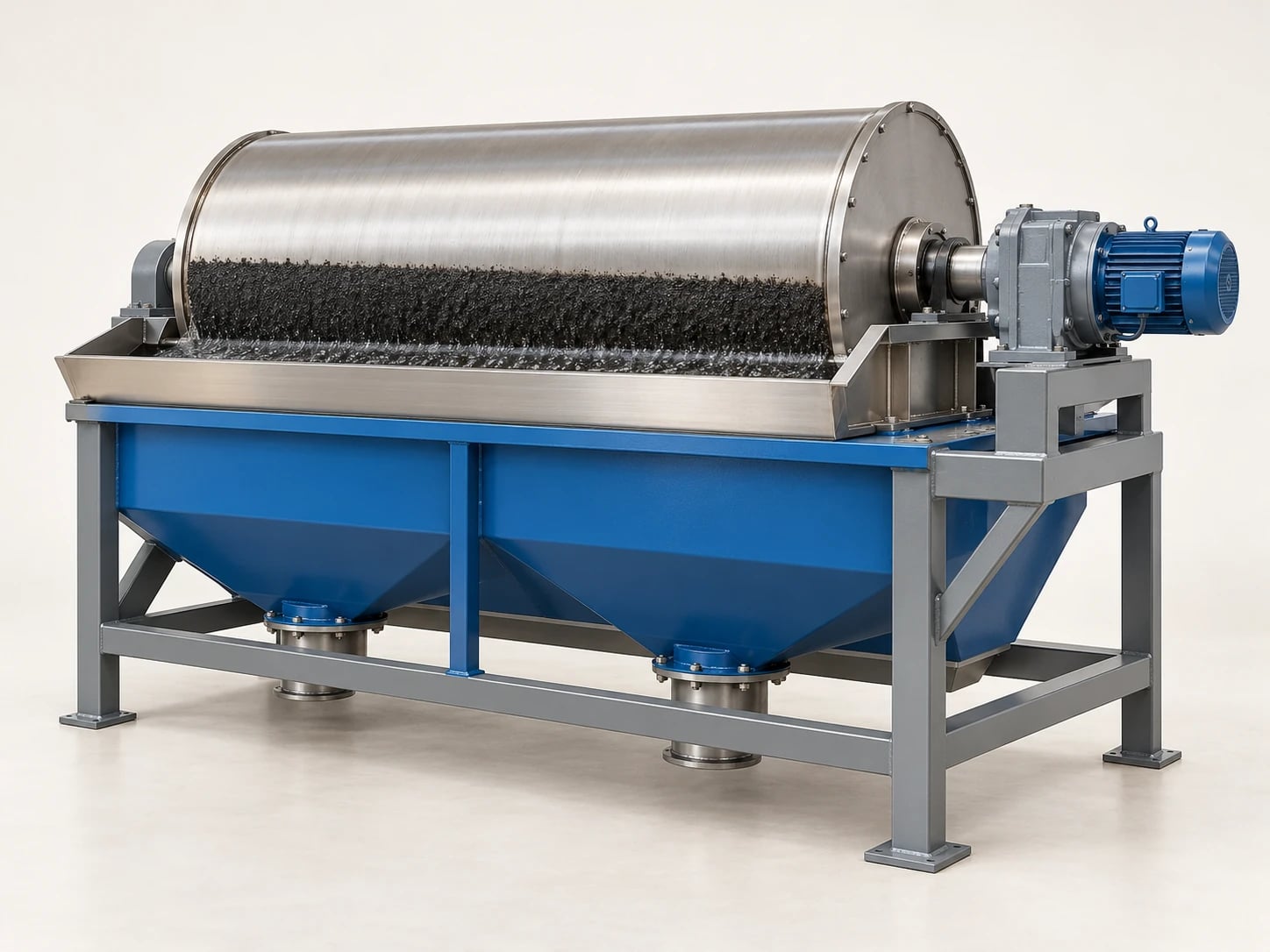
Magnetic Separator Specifications
The figures below describe typical industry specifications for this class of equipment rather than a single fixed model. Use them to scope a requirement, then confirm exact figures against the supplied unit before purchase.
| Specification | Typical value |
|---|---|
| Low-intensity type | Permanent-magnet drum, wet or dry, for strongly magnetic minerals |
| Low-intensity field | Typically about 1,000–3,000 gauss at the drum surface |
| High-intensity types | Wet high-intensity (WHIMS) with matrix, rare-earth roll or induced roll (dry) |
| High-intensity field | About 7,000–20,000 gauss, with higher gradients in a WHIMS matrix |
| Typical targets | Magnetite, ferrosilicon recovery; ilmenite, hematite, garnet, monazite (high intensity) |
| Feed | Sized feed; dry machines need dry, free-flowing material |
| Products | Magnetic, middling and non-magnetic streams |
| Power | Drum or roll drive; electromagnets also need excitation power |
Magnetic Separator: Uses and Applications
- Heavy mineral sands: separating ilmenite from rutile and zircon
- Removing magnetite from gold gravity concentrates and black sands
- Iron ore and magnetite concentration
- Recovering magnetite or ferrosilicon medium in dense media separation
- Removing tramp iron ahead of crushers and mills
Maintenance Schedule
Most premature failures in this equipment class trace back to a missed routine check rather than a design fault. The intervals below are a practical starting schedule; adjust them to your duty cycle and the manufacturer manual.
| Interval | Task |
|---|---|
| Every shift | Check feed rate and distribution across the drum or roll; confirm splitter positions and that product streams are clean. |
| Weekly | Inspect drum shell or roll belt for wear and damage; clean any build-up of magnetic material. |
| Monthly | Check the field strength against the baseline where a gaussmeter is available; inspect bearings and drives. |
| Annually | Replace worn shells, belts or matrix; service electromagnet coils and cooling where fitted. |
Frequently Asked Questions
Will a magnet remove gold from my concentrate?
No. Gold is not magnetic, so a magnet removes magnetite and other magnetic minerals and leaves the gold behind. That is why a magnet is used to clean black-sand concentrate. Check the magnetic fraction occasionally, because gold can be trapped in clumps if the material is wet or not spread thinly.
Low or high intensity: which do I need?
It depends on the mineral. Magnetite responds to a low-intensity drum. Weakly magnetic minerals such as ilmenite and hematite need high intensity. A magnetic susceptibility test on your sample shows which minerals report at which field strength.
Can magnetic separation recover rare earth minerals?
Some rare-earth-bearing minerals, such as monazite, are weakly magnetic and can be separated with high-intensity machines, usually alongside gravity and electrostatic steps. The flowsheet depends entirely on the mineral assemblage, so it needs specialist test work.
Supply and Delivery Across Tanzania
Bart Mining supplies magnetic separator and related equipment to mining operations throughout Tanzania, with primary coverage of the Lake Victoria Goldfields (Mwanza, Kahama, Geita, Shinyanga and Bukombe), alongside the Lupa Goldfields around Chunya and Mbeya, and delivery nationwide from Dar es Salaam.