The Gold Elution Process, Step by Step
Elution is the reverse of adsorption. In the leach tanks, activated carbon picks up gold from cyanide solution at ambient temperature. In the elution column, heat, caustic soda and cyanide push the gold back off the carbon into a small volume of rich solution. Electrowinning then takes the gold out of that solution as a solid.
- Recover and wash the loaded carbon. Carbon is pumped from the first CIL or CIP tank, screened from the slurry and washed with water so ore fines do not enter the column.
- Acid wash. Dilute hydrochloric acid, typically around 3%, dissolves calcium carbonate and other scale that blocks carbon pores and slows the strip. The carbon is then rinsed and neutralised. Acid washing is essential in AARL and strongly recommended in Zadra.
- Elution (the strip). Hot caustic cyanide solution passes through the carbon bed at 110–140 °C in a pressure column, or around 95 °C in an atmospheric one. Higher temperature strips faster. The target is below 100 g/t gold left on the carbon.
- Electrowinning. The gold-bearing (pregnant) eluate flows through a cell where a rectifier drives current between anodes and cathodes. Gold plates onto steel wool or stainless mesh cathodes.
- Smelting. Cathode sludge is filtered, dried and smelted with fluxes into doré bars, which are sold and refined off site.
- Carbon regeneration. Stripped carbon is heated in a kiln at roughly 650–750 °C in a steam atmosphere to burn off organic fouling and restore its activity, then returned to the leach tanks.
AARL vs Zadra Elution
The two methods use the same chemistry but run the strip differently. Zadra circulates one eluant continuously through the column and the electrowinning cell. AARL (developed by Anglo American Research Laboratories) soaks the carbon, then displaces the gold with clean hot water in a single pass, producing a smaller, richer eluate.
| Zadra | AARL | |
|---|---|---|
| How the strip runs | Continuous recirculation of eluant between column and electrowinning cell | Acid wash, caustic cyanide pre-soak, then elution with hot clean water in one pass |
| Eluant | About 1% NaOH with 0.1–0.2% NaCN | Pre-soak about 2–3% NaOH with 1–3% NaCN; elution with softened or demineralised water |
| Temperature and pressure | About 95 °C atmospheric, or 125–140 °C pressurised | 110–120 °C, pressurised |
| Cycle time | 48–72 h atmospheric; 12–24 h pressurised | 8–14 h |
| Eluate | Larger volume, lower grade, electrowon in circuit | Smaller volume, higher grade, electrowon after the strip |
| Water quality | Tolerant of site water | Needs good-quality water; hardness fouls the carbon |
| Equipment | Fewer tanks, simpler controls | Acid wash, pre-soak and eluate tanks; more valves and sequencing |
| Best fit | Small and medium plants, toll elution, 0.5–3 t carbon per batch | Larger plants where short cycles and throughput matter |
For most small-scale and mid-tier operations in Tanzania, pressure Zadra is the practical middle ground: a much shorter cycle than atmospheric Zadra without the extra tanks and water treatment AARL needs. The trade-offs are covered in more depth in CIL vs CIP vs heap leach and the small CIP and CIL plant guide.
What a Complete Elution Plant Includes
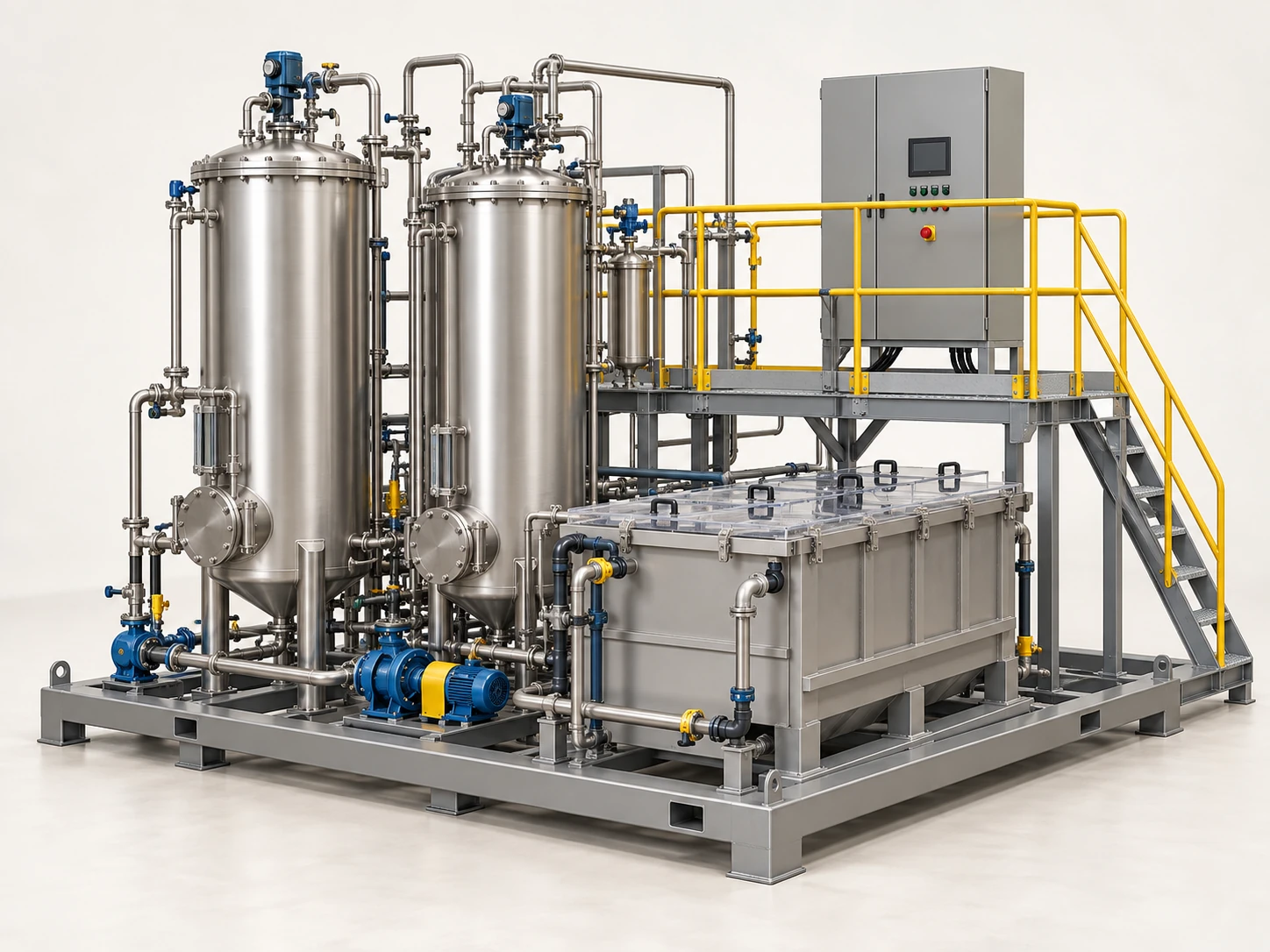
Quotes differ most in what they leave out. A working plant, not just a column, includes:
| Component | What it does |
|---|---|
| Elution column | Insulated stainless vessel holding the carbon batch, pressure rated and certified for pressure methods |
| Elution heater or boiler | Diesel-fired or electric heating with a heat exchanger to hold the eluant at strip temperature |
| Acid wash vessel | Removes scale before stripping; often the column itself in small plants |
| Solution tanks and pumps | Eluant make-up, circulation, pre-soak (AARL) and barren solution |
| Electrowinning cell and rectifier | Plates gold from the eluate onto cathodes |
| Carbon regeneration kiln | Restores carbon activity so it keeps loading gold |
| Smelting furnace | Turns cathode sludge into doré, with fluxes, crucibles and moulds |
| Controls and safety | Temperature and pressure control, HCN gas detection, ventilation, eyewash and shower, secure access |
Sizing the Carbon Batch to Your Plant
Batch size comes from how much gold your leach circuit recovers and how heavily the carbon is loaded before it is stripped:
Carbon to strip per day (t) = gold recovered per day (g) ÷ (loaded carbon grade − stripped carbon grade) (g/t)
The table below works this through for a free-milling ore at 3 g/t, 90% leach recovery, carbon loaded to 1,500 g/t and stripped to 100 g/t, with a strip every three days. Change any of those and the batch changes in proportion. Higher grade or leaner loading means more carbon.
| Plant throughput | Carbon to strip per day | Batch every 3 days |
|---|---|---|
| 50 t/day | ≈ 0.1 t | ≈ 0.3 t (consider toll elution) |
| 100 t/day | ≈ 0.2 t | ≈ 0.6 t |
| 250 t/day | ≈ 0.5 t | ≈ 1.5 t |
| 500 t/day | ≈ 1.0 t | ≈ 2.9 t |
| 1,000 t/day | ≈ 1.9 t | ≈ 5.8 t |
Size the column with a margin above the calculated batch for grade spikes, and check that the regeneration kiln can process the same tonnage between strips. A batch below about half a tonne usually makes vat leach and small CIP operators better off sharing or tolling a plant than owning one.
Power and Heating on Tanzanian Sites
Elution equipment is specified for the Tanzanian supply standard of 400 V three phase at 50 Hz (230 V single phase for controls). Heating is the largest energy load, holding the eluant at strip temperature for the whole cycle.
- Diesel-fired heating is the usual choice off grid. It is cheaper to run than electric heating on a generator, which converts diesel to electricity and back to heat with large losses.
- Electric heating makes sense on a reliable TANESCO grid connection, where it is cleaner and easier to control.
- Generator sizing must cover the circulation pumps, rectifier, kiln burner blowers, lighting, ventilation fans and gas detection together, with starting margin for pump motors. See diesel generators for mining and powering an off-grid mine site.
- Ventilation and gas detection run whenever cyanide solution is hot. They belong on a protected supply, not the first circuit shed when a generator is overloaded.
Reagent supply for the strip (caustic soda, sodium cyanide, hydrochloric acid and make-up carbon) is covered in activated carbon and sodium cyanide supply in Tanzania.
Elution & Electrowinning Plant Specifications
The figures below describe typical industry specifications for this class of equipment rather than a single fixed model. Use them to scope a requirement, then confirm exact figures against the supplied unit before purchase.
| Specification | Typical value |
|---|---|
| Carbon batch size | 0.5–10 t per cycle |
| Elution methods | Zadra (atmospheric or pressure) and AARL |
| Operating temperature | 110–140 °C |
| Operating pressure | 150–350 kPa for pressure Zadra |
| Eluant | 1–2% NaOH with 0.1–2% NaCN, per method |
| Cycle time | 8–14 h AARL; 12–24 h pressure Zadra; 48–72 h atmospheric Zadra |
| Heating | Diesel or electric boiler with heat exchanger |
| Electrowinning cathodes | Steel wool or stainless mesh |
| Cell current density | 10–40 A/m² typical |
| Gold in barren carbon | Target below 100 g/t after strip |
| Vessel construction | Stainless steel, insulated and pressure rated |
| Ancillaries | Acid wash, carbon regeneration kiln, rectifier |
Elution & Electrowinning Plant: Uses and Applications
- CIL and CIP plant gold recovery
- Heap leach carbon column stripping
- Toll elution for small operators sharing a facility
- Carbon regeneration and reactivation circuits
Maintenance Schedule
Most premature failures in this equipment class trace back to a missed routine check rather than a design fault. The intervals below are a practical starting schedule; adjust them to your duty cycle and the manufacturer manual.
| Interval | Task |
|---|---|
| Every cycle | Check vessel pressure relief and temperature control; sample barren carbon to confirm strip efficiency. |
| Weekly | Inspect cathodes and harvest gold sludge; check rectifier output and cell busbar connections. |
| Monthly | Descale heat exchanger; inspect pump seals and pipework for cyanide leaks; test gas detection in the area. |
| Quarterly | Pressure vessel inspection; recalibrate temperature and pressure instrumentation. |
| Annually | Statutory pressure vessel certification; full electrical inspection of the rectifier and cell. |
Frequently Asked Questions
What is the difference between Zadra and AARL elution?
Zadra circulates hot caustic cyanide continuously through the carbon and directly through the electrowinning cell, making it simpler but slower. AARL uses a separate acid wash then a soak-and-displace sequence with clean water, producing a smaller volume of much higher-grade eluate in a shorter cycle. AARL suits higher throughput; Zadra suits simpler, smaller plants.
How long does an elution cycle take?
8–24 hours. Pressure Zadra typically runs 12–24 h, AARL commonly 8–14 h. Cycle time is set by carbon loading, temperature and eluant flow. Running colder to save fuel lengthens the cycle and usually costs more than it saves.
What safety controls does an elution plant need?
Cyanide handling procedures, HCN gas detection with alarms, forced ventilation, emergency eyewash and shower, pressure vessel certification, and controlled access. Elution combines cyanide, caustic, heat and pressure in one place, so it is the highest-hazard area in a typical gold plant.
How is gold recovered from the cathodes?
Steel wool cathodes are acid-digested or directly smelted with fluxes; stainless mesh cathodes are pressure-washed to release a gold sludge which is filtered, dried and smelted. The result is doré bullion, which is then refined further off-site.
Supply and Delivery Across Tanzania
Bart Mining supplies elution & electrowinning plant and related equipment to mining operations throughout Tanzania, with primary coverage of the Lake Victoria Goldfields (Mwanza, Kahama, Geita, Shinyanga and Bukombe), alongside the Lupa Goldfields around Chunya and Mbeya, and delivery nationwide from Dar es Salaam.
Commonly supplied to: Chunya, Mpanda.
Manufacturer or supplier of this equipment? Bart Mining sells machinery like the elution & electrowinning plant to buyers across Tanzania through its local market partnership.
Safety and scope references: Cyanide Code scope