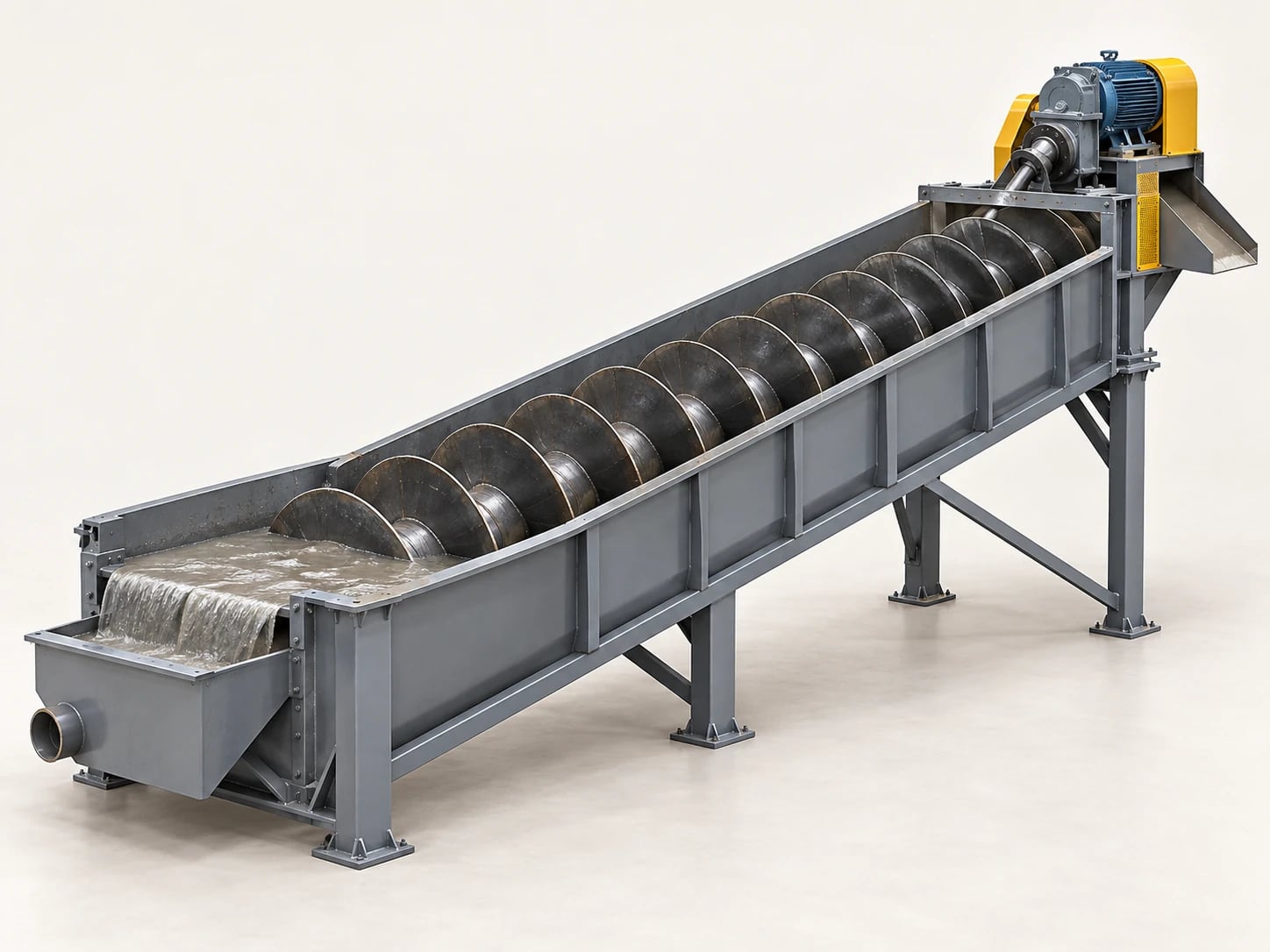
Spiral Classifier Specifications
The figures below describe typical industry specifications for this class of equipment rather than a single fixed model. Use them to scope a requirement, then confirm exact figures against the supplied unit before purchase.
| Specification | Typical value |
|---|---|
| Function | Returns coarse sands to the mill; sends fine overflow forward |
| Configuration | Single or double spiral; high-weir or submerged spiral |
| Trough slope | About 3–4 inches per foot (roughly 14–18°) |
| Capacity driver | Pool area at the required overflow size, plus sand-raking capacity |
| Overflow size | Set by pool area, spiral speed and pulp density; confirmed by test |
| Drive | Electric motor and gearbox with spiral lifting gear |
| Layout | Placed beside the mill so sands return by gravity launder |
Spiral Classifier: Uses and Applications
- Closing ball mill circuits in gold, copper and graphite plants
- Desliming and dewatering sands
- Washing and classifying sand and fine ore
- Small plants where a pumped hydrocyclone circuit is not wanted
Maintenance Schedule
Most premature failures in this equipment class trace back to a missed routine check rather than a design fault. The intervals below are a practical starting schedule; adjust them to your duty cycle and the manufacturer manual.
| Interval | Task |
|---|---|
| Every shift | Check overflow density and size, the sand return to the mill and spiral current draw; listen for gearbox noise. |
| Weekly | Inspect spiral flight wear shoes and the lower bearing; grease the lifting gear and bearings. |
| Monthly | Check gearbox oil, drive alignment and trough liners for wear. |
| Before shutdown | Raise the spiral or keep it turning while the pool drains so settled sands do not bury it. |
Frequently Asked Questions
Spiral classifier or hydrocyclone?
A spiral classifier needs no slurry pump at pressure, tolerates changes in feed and is simple to run, but it is larger and slower to respond. A hydrocyclone is compact and cheap but needs a steady pumped feed at the right pressure. Small plants with limited maintenance support often prefer a spiral classifier; larger plants usually use cyclones.
How is a spiral classifier sized?
By the pool area needed to overflow the target size at the plant’s fine-solids rate, and by the spiral’s capacity to rake the coarse sand back to the mill. The mill and classifier are laid out to scale so the sand returns by gravity, which sets the length.
What happens if the power fails?
Sand settles in the pool and can bury the spiral, so it cannot restart under load. Many classifiers have a lifting gear to raise the spiral; plan a restart procedure and standby power for the mill circuit.
Supply and Delivery Across Tanzania
Bart Mining supplies spiral classifier and related equipment to mining operations throughout Tanzania, with primary coverage of the Lake Victoria Goldfields (Mwanza, Kahama, Geita, Shinyanga and Bukombe), alongside the Lupa Goldfields around Chunya and Mbeya, and delivery nationwide from Dar es Salaam.