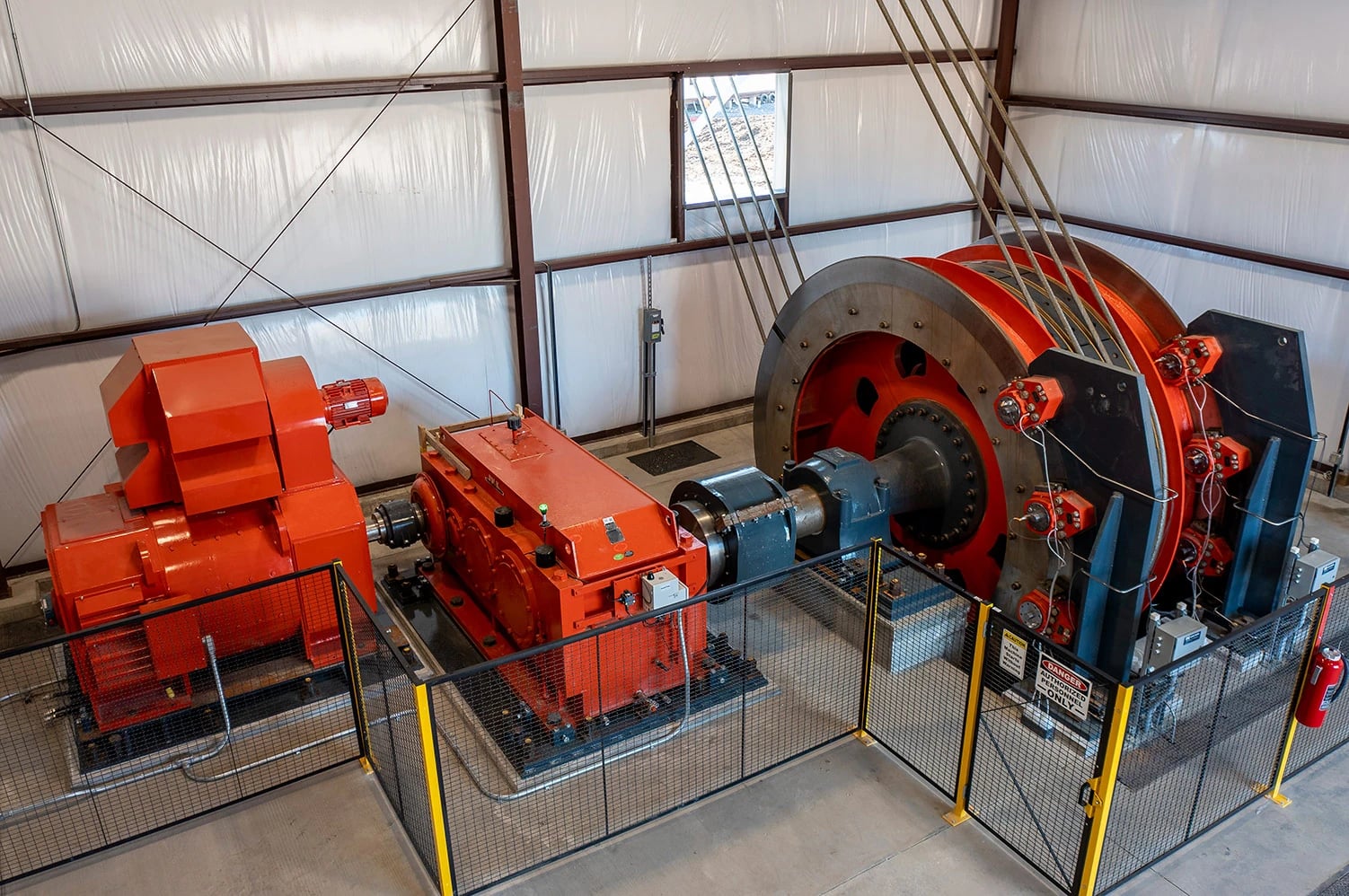
Mine Hoist & Headframe Systems Specifications
The figures below describe typical industry specifications for this class of equipment rather than a single fixed model. Use them to scope a requirement, then confirm exact figures against the supplied unit before purchase.
| Specification | Typical value |
|---|---|
| Headframe height | 8–18 m for small-scale shafts |
| Construction | Bolted or welded structural steel, galvanised or painted |
| Sheave diameter | ≥60× rope diameter to limit bending fatigue |
| Sheave bearings | Sealed spherical roller, greased |
| Conveyance options | Kibble, skip or cage |
| Shaft collar | Reinforced concrete with fall-protection grid and gates |
| Safety devices | Overwind switch, mechanical catch gear, slack rope detection |
| Signalling | Bell or electrical signal system between levels and winder house |
| Tipping arrangement | Scroll or dump gate at bank level |
| Design standard | Site-specific structural design and certification required |
Mine Hoist & Headframe Systems: Uses and Applications
- Permanent ore hoisting on small-scale gold shafts
- Shaft sinking headgear during development
- Material and personnel access where certified
- Dewatering pipe and cable support down shaft
Maintenance Schedule
Most premature failures in this equipment class trace back to a missed routine check rather than a design fault. The intervals below are a practical starting schedule; adjust them to your duty cycle and the manufacturer manual.
| Interval | Task |
|---|---|
| Every shift | Check sheave rotation is free and true; inspect shaft collar gates and fall protection. |
| Weekly | Grease sheave bearings; check rope alignment in sheave grooves for side wear. |
| Monthly | Inspect all structural bolted connections for tightness; check for corrosion at splash zones. |
| Quarterly | Measure sheave groove wear against gauge; test overwind and slack-rope devices. |
| Annually | Structural inspection by a competent engineer including weld and foundation examination. |
Frequently Asked Questions
How tall does a headframe need to be?
Tall enough that the conveyance can be raised clear of the tipping point with sufficient overwind allowance above it. For a kibble tipping at bank level, 8–12 m is common; skip installations with a dump scroll need more. Overwind clearance is a safety requirement, not a rounding allowance.
Why must sheave diameter be at least 60 times rope diameter?
Every pass over a sheave bends the rope, and fatigue life falls sharply as the bend gets tighter. A D/d ratio below about 60:1 can cut rope life by more than half. Undersized sheaves are one of the most common and most expensive false economies in small-scale shaft installations.
Can a headframe be built from timber?
Timber headgear was historically common and still appears on artisanal workings, but it degrades unpredictably with weather, termites and rot, and cannot be reliably inspected or certified. Steel is strongly preferred anywhere the installation is permanent or carries people.
What is catch gear?
A mechanical arrestor that grips the shaft guides if the rope breaks or goes slack, stopping the conveyance before it falls. It is mandatory on personnel-carrying cages in most jurisdictions and strongly advisable on any conveyance that travels in a shaft where people work below.
Supply and Delivery Across Tanzania
Bart Mining supplies mine hoist & headframe systems and related equipment to mining operations throughout Tanzania, with primary coverage of the Lake Victoria Goldfields (Mwanza, Kahama, Geita, Shinyanga and Bukombe), alongside the Lupa Goldfields around Chunya and Mbeya, and delivery nationwide from Dar es Salaam.
Commonly supplied to: Kahama.
Manufacturer or supplier of this equipment? Bart Mining sells machinery like the mine hoist & headframe systems to buyers across Tanzania through its local market partnership.