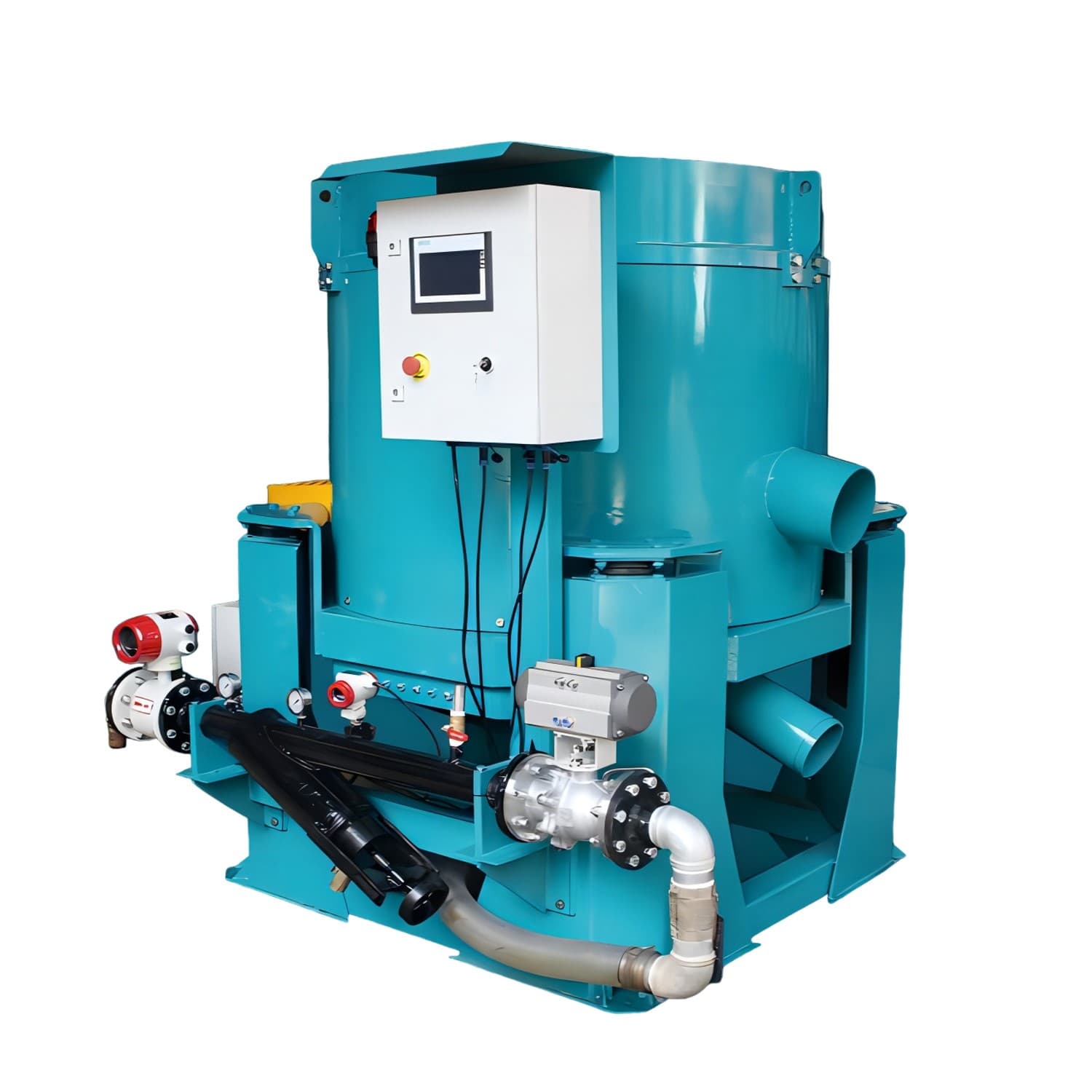
Many small-scale gold operations in Tanzania keep working through the rains. It can be done well, but wet, clay-rich ore behaves differently from dry ore, and the plant has to be set up for it. This guide explains what changes, which equipment helps, and how to put it together into a wash plant that keeps recovering fine and coarse gold when the ground is soaked.
Rain Is Not the Real Problem. Clay Is.
Water on its own does not stop a wash plant, which uses a lot of water anyway. The trouble in the rainy season is that the ore becomes wetter and stickier, and the clay in it starts to hold on to the gold.
Clay causes two problems. First, gold gets trapped inside lumps of clay, which behave like stones and are thrown out with the waste rock, taking the gold with them. Second, very fine clay mixes into the water and makes it thick and muddy, and in thick water fine gold cannot settle properly in a concentrator or on a sluice.
The ore also changes from day to day: after a heavy storm it can be much wetter than the day before. A steady feed rate matters more in the rainy season than at any other time of year.
Does Rain Change the Quality of the Ore?
Rain does not change how much gold is in the ore. It changes how the ore behaves and how it is measured.
- Wet ore is heavier. A tonne of wet ore contains less rock than a tonne of dry ore, so throughput and grade figures based on wet weight can mislead, and you pay to move the water.
- Pits get diluted. Wet pit walls can slump and mix waste into the ore, lowering the grade reaching the plant.
- Samples can mislead. Samples taken from wet, muddy ore should be dried before weighing and testing, or the results will not compare with dry-season samples. See test work before you buy a plant.
What a Rotary Scrubber Does
A rotary scrubber is a rotating drum that tumbles ore with water long enough to break the clay apart, so gold is freed before screening instead of being thrown out inside clay lumps. For sticky or muddy ore it is the single biggest improvement to rainy-season recovery. Where clay is light, a trommel with a scrubbing section at the front can be enough; if the ore forms balls that do not break apart in water, a dedicated scrubber is what fixes it.
Trommels and Screen Size
A trommel separates ore by size as it rotates. Fine screens of 3–5 mm are possible, but they block up quickly with clay if the trommel is doing all the work on its own. A fine screen works best after a scrubber, with strong water sprays, and after a coarser screen (around 10–16 mm) has already removed the stones.
Getting the Screen Size Right for the Concentrator
This is the point buyers most often get wrong when they order a wash plant. Centrifugal gold concentrators are built for feed below about 2 mm; larger material, including 3–5 mm, can block the bowl and lower recovery instead of improving it.
The fix is to split the material by size and treat each part the right way:
- Under 2 mm goes to the centrifugal concentrator, which recovers fine gold very effectively.
- From roughly 2 mm to 16 mm goes over a sluice or jig, which catches coarser gold well.
How Much Fine Gold Can a Concentrator Recover?
On free gold, meaning gold not locked inside rock, a well set-up centrifugal concentrator usually recovers 85–98%. Alluvial and eluvial gold is usually free, which works in an operator's favour. Recovery drops for extremely fine, dust-like gold, and it drops further with heavy mud in the water, which is another reason the scrubber and clean water management matter in the rainy season. Because every deposit behaves differently, the reliable way to know what your ore will give is to test a sample before finalising the setup.
A Wash Plant That Works in the Rain
All of this equipment can be combined into one alluvial gold wash plant. For wet, clay-rich ore, a practical layout is:
| Stage | Equipment | Job |
|---|---|---|
| 1 | Feed hopper with grizzly | Keeps the largest rocks out of the plant |
| 2 | Rotary scrubber | Breaks up clay |
| 3 | Trommel, 10–16 mm | Throws out stones |
| 4 | Fine screen, under 2 mm | Prepares the concentrator feed |
| 5a | Centrifugal concentrator → shaking table | Recovers and cleans fine gold, under 2 mm |
| 5b | Sluice or jig | Recovers coarse gold, 2–16 mm |
Sizing the plant depends on tonnes per hour targeted, how much clay is in the ore, the largest rock size, water available on site, and whether power comes from the grid or a generator.
Preparing the Site for the Rains
The plant is only part of the answer. Before the rains arrive, plan for:
- Pit dewatering: a pump that can keep the pit workable after heavy storms.
- Drainage around the plant so rainwater does not flood the feed area.
- A covered stockpile, so the feed does not turn to mud before it even reaches the hopper.
- Settling ponds to recycle water, sized so they do not overflow in a heavy storm. An overflowing pond is an environmental compliance problem, not only a lost-water one.
- Access roads that stay passable for fuel and spare parts.
- Electrics that are covered, weather-protected and properly earthed.
Regions We Serve
Frequently Asked Questions
Can a gold wash plant run through the whole rainy season?
Yes, with the right set-up: a scrubber ahead of screening, a properly sized fine screen, feed split by size to the concentrator and the sluice or jig, water recycling, and site preparation for drainage and stockpile cover. Plants that are not set up for clay lose recovery and reliability in the rains, not because the rain itself is a problem.
Do I need a rotary scrubber for every alluvial operation?
No, only where the ore is sticky or clay-bound. Test how the ore behaves in water: if it breaks apart easily, a trommel alone may be enough. If it forms balls that hold together, a scrubber is worth the investment.
What is the single biggest mistake in a rainy-season wash plant order?
Sending material above 2 mm into a centrifugal concentrator. It is a common request because buyers assume finer screening always means better recovery, but it blocks the concentrator bowl instead. Splitting the feed by size into a concentrator stream and a sluice or jig stream fixes it.
How do I know what recovery to expect from my own ore?
Test a representative sample rather than relying on a general figure. Recovery depends on gold particle size, how much of it is liberated, and how much clay and slime the ore carries, all of which vary by deposit. See test work to do before you buy a gold plant.